Why “send USDC to another chain” is not one simple action
USDC can exist on multiple blockchain networks, but the same ticker does not mean every version has the same issuer, contract or redemption path. A transfer from one chain to another may use a bridge that locks tokens on the source chain and releases or mints a representation on the destination. Another route may use a burn-and-mint mechanism in which the issuer destroys tokens on one supported network and issues them on another. These designs have different trust assumptions.
Before starting, identify the exact asset and networks involved. Confirm the token contract address on the source and destination chains using the issuer’s official documentation or a trusted explorer. A wallet can show two tokens with the same symbol that have different contracts. A destination application may accept only a specific version. Sending a wrapped token to a service that expects a native-issued token can lead to delays, rejection or loss if the service cannot support that contract.
What a bridge does
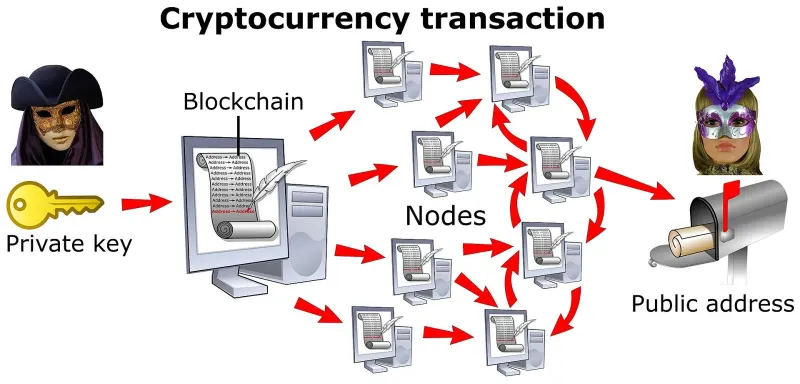
A cross-chain bridge coordinates actions on two separate networks. In a common lock-and-mint design, the user deposits an asset into a source-chain contract; the bridge then verifies the deposit and causes a corresponding wrapped token to appear on the destination chain. Returning may burn the wrapped representation and release the original asset. Other systems use liquidity providers, message relayers, validators, light clients or burn-and-mint issuance. The word “bridge” covers many architectures.
The bridge does not make the two chains become one network. It creates a process for recognizing and acting on events across them. A successful transfer can depend on the source chain finalizing the deposit, the bridge’s verification system, the destination chain processing a message and the liquidity or minting mechanism being available. A delay or failure at any step can affect the user. Ethereum.org’s bridge documentation explains that trust assumptions vary, from external validator sets to systems that rely more directly on cryptographic verification.
Native USDC and wrapped representations
When the issuer supports native USDC on both networks, a burn-and-mint route may destroy the source representation and issue native USDC on the destination. That can avoid some reserve risk associated with a separate wrapped token, but users still rely on the issuer’s service, supported networks, contracts and operational process. It is not risk-free simply because the token is native on both sides.
Third-party bridges may instead create a representation backed by assets locked elsewhere. The token’s value depends on the bridge’s contracts, custody arrangements or validator model. If the bridge is exploited or cannot release collateral, the representation may trade below its intended value. A user should check whether the destination token is issued by Circle, a recognized bridge contract or another protocol, and whether the receiving exchange or application supports that exact version.
Check the networks and contract addresses
The most common user mistakes are simple: choosing the wrong destination network, copying an address for a different chain, selecting a token with a similar name or leaving out the required destination memo. Before connecting a wallet, verify the bridge’s official domain using a saved bookmark or the project’s official documentation. Search ads, direct messages and unsolicited “support” links can lead to phishing sites that mimic a bridge interface.
Then confirm the source chain in the wallet and the destination chain in the bridge. Check that the receiving address is controlled by you or by the destination service that will accept the asset. If an exchange deposit page gives a specific network, follow that network exactly. A network mismatch can make recovery difficult or impossible. Never rely on a token icon or symbol alone; compare the contract address and chain identifier.
Compare route design and trust assumptions
A canonical bridge is usually designed by or closely associated with the ecosystem whose assets it moves. A third-party bridge may support more routes, faster completion or lower fees, but it adds its own operators, contracts or liquidity providers. A route using a liquidity network may deliver funds before a longer settlement process completes; the provider takes on some risk and charges for that service. Faster is not automatically safer, and “audited” does not mean bug-free.
Review who can pause the system, upgrade contracts or approve messages. Check whether funds are locked in a smart contract, held by a custodian or supplied by a liquidity provider. Understand whether a transfer can be cancelled and what happens if the destination message is delayed. If the bridge’s documentation cannot explain what secures the route, do not assume the transaction is trustless just because it is presented in a wallet interface.
Fees, minimums and timing
The quoted cost can include source-chain gas, bridge fees, destination-chain gas, liquidity-provider fees and an exchange rate or spread. Some routes ask the user to hold a small amount of the destination chain’s native token for future transactions. Others sponsor the fee or deduct it from the amount delivered. Read the final receive amount, not just the headline fee.
Completion time depends on block confirmation, bridge verification, message relaying, liquidity and congestion. A transfer that normally takes minutes may take longer during high demand or an incident. Avoid starting a time-sensitive transfer without enough margin. If a transaction is pending, do not repeatedly submit the same transfer or follow a stranger’s instruction to “unlock” the funds. Check the bridge’s official status page and transaction explorer first.
A safer transfer workflow
Start by confirming that the source and destination networks both support the asset and that the recipient can accept it. Open the bridge from an official source, verify the domain and connect only the wallet you intend to use. Inspect the requested permissions. A bridge transfer may require a token approval; make sure the spender is the bridge contract named in the official documentation and that the allowance is limited where the wallet allows it.
Enter the recipient address and amount, then check the token name, network, destination address, minimum receive amount, estimated fees and expected duration on the confirmation screen. Use a small test amount when the route or recipient is unfamiliar and when the fees make a test reasonable. The test can confirm a basic path; it cannot prove the bridge is secure or guarantee that a larger transfer will have the same liquidity and execution price.
After signing, save the transaction hash and monitor both sides of the transfer. Do not share a recovery phrase or private key with support. If the transfer is delayed, use the official support channel and provide public transaction identifiers only. If the bridge asks you to sign an unrelated message or approve a new contract after the transfer, stop and verify why it is required before proceeding.
Common failure cases
A transfer may appear stuck because the source transaction is not finalized, the bridge is waiting for validators, the destination chain is congested or a liquidity provider has not fulfilled the request. A token may arrive under a different contract than expected, or a wallet may need the verified token address added before it displays the balance. These cases are not the same as a lost transfer, so check the transaction state and contract before taking action.
Recovery is not always possible. If assets were sent to the wrong address, the bridge cannot generally reverse a finalized blockchain transaction. If the bridge itself is compromised, users may have to wait for the protocol team or other parties to respond. Anyone promising guaranteed recovery in exchange for a seed phrase, private key or upfront payment should be treated as a potential scammer.
A checklist before bridging USDC
Verify the bridge domain, the official USDC contract on both chains, and whether the destination asset is native or wrapped. Confirm the network selection, recipient address and any memo. Review approval scope, total fees, expected amount and completion time. Check the bridge’s trust model, upgrade authority, status page and support channel. If the route is unfamiliar, consider a small transfer first and avoid moving funds you cannot afford to have temporarily inaccessible.
Bridges make multi-chain applications possible, but they add another layer to a transaction. The safest choice depends on the asset, network, route design and the user’s ability to manage keys and fees. There is no universal bridge that is best for every transfer. Understanding which entities and contracts stand between the source and destination is more important than choosing the route with the lowest advertised fee.
The takeaway
Bridging USDC is not just moving a ticker from one wallet screen to another. It involves a source asset, a destination representation, two networks and a mechanism that verifies and completes the transfer. Native issuance, wrapped assets, liquidity routes and canonical bridges carry different risks. Users should verify contracts, addresses, network support, permissions and fees before signing.
Good habits reduce avoidable mistakes: use official links, read every wallet prompt, test unfamiliar routes where practical and keep transaction hashes for support. They cannot eliminate smart-contract or counterparty risk. A bridge can be useful and still fail; a careful user understands that limit before sending funds.
Sources and further reading
Ethereum.org: bridge designs and risks · Circle: USDC reserve and transparency information · EIP-7683: cross-chain intents and security assumptions
Comments
Loading comments…